
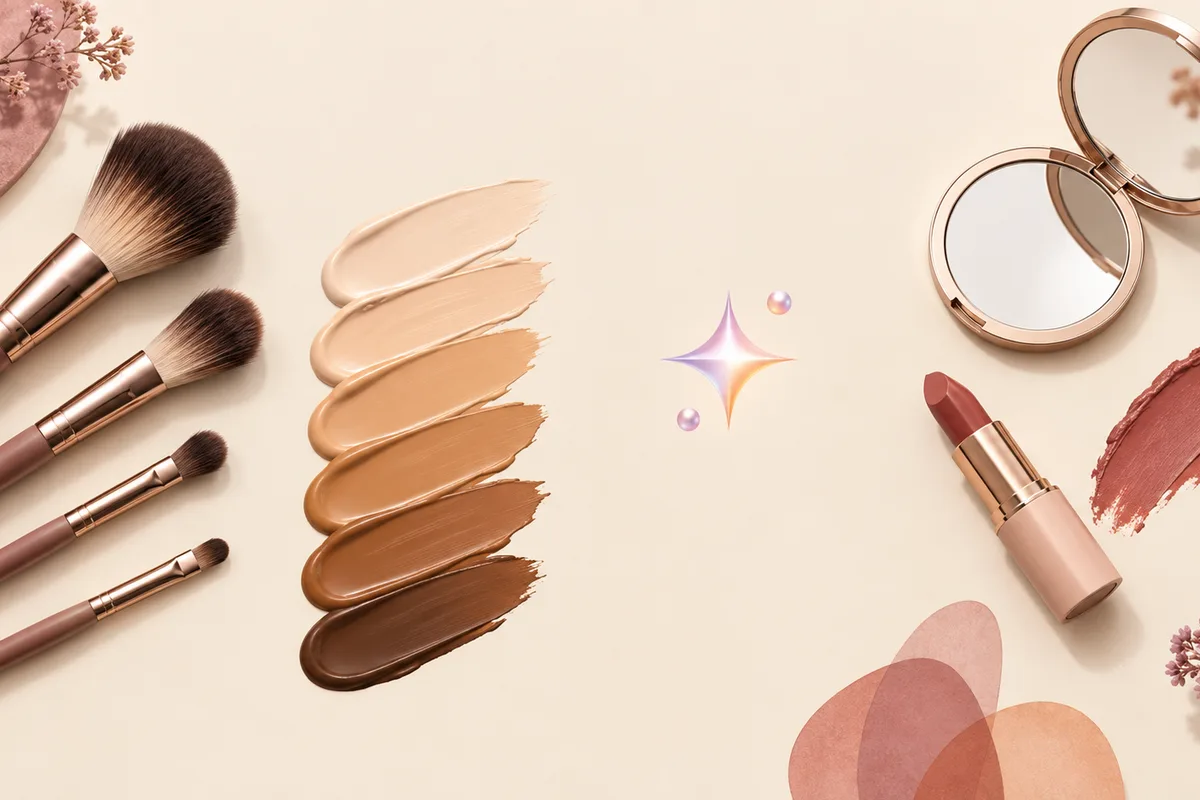
Start with comfort, not camouflage
Dryness often changes how makeup looks: foundation may catch on rough patches, emphasize fine flakes, or feel tight by midday. The instinct is to add more product, but a thicker layer can make texture more noticeable. A more useful sequence is to make skin feel comfortable first, then use less pigment and place it selectively. Makeup can soften the appearance of uneven tone, but it cannot repair a skin barrier or treat the cause of ongoing dryness. Keep that distinction clear when choosing products and setting expectations.
Dry skin can be temporary or persistent, and the feeling may vary with weather, cleansing habits, or products. This article focuses on cosmetic application, not diagnosis. If skin is cracked, painful, bleeding, very itchy, or repeatedly stings when products are applied, pause experiments and seek advice from a clinician or dermatologist. The American Academy of Dermatology recommends gentle care and fragrance-free moisturizers for dry skin; its guidance is a more suitable starting point than aggressively exfoliating to make makeup look smoother.
Make the skincare underneath boring and reliable
Use a gentle cleanse that does not leave your face feeling stripped, and apply moisturizer while skin is slightly damp if that suits your routine. AAD guidance for dry skin favors fragrance-free products and often a cream or ointment over a thin lotion when more moisture is needed. Choose a moisturizer you already tolerate rather than layering a new serum, oil, sleeping mask, and primer all at once. Extra steps can make it harder to identify the product behind any burning or pilling.
During the day, apply broad-spectrum sunscreen as directed before makeup. The AAD recommends SPF 30 or higher, with additional sun-protective measures such as shade and clothing. Give skincare time to settle; if the surface remains tacky, wait a little longer before base makeup. When layers roll up, use less product, simplify the routine, or change the order after testing on a quiet day. Do not mix sunscreen into foundation to make it feel lighter, because that may interfere with using the labeled amount evenly.
Choose a formula by finish and behavior, not marketing words
A dewy or natural-finish foundation, skin tint, or tinted moisturizer may feel more flexible than a very matte long-wear formula, but labels are not standardized and no finish is universally best for dry skin. Look at how the product spreads, how much coverage you need, and whether it remains comfortable after several hours. If possible, test a small area after your normal skincare, then check it in daylight. A shade that blends seamlessly will often look more natural than a higher-coverage formula chosen to conceal every variation in tone.
Look for a formula that does not emphasize the patches you notice most. A fluid or cream texture can be easy to apply in small amounts; a rich product may feel lovely to one person and heavy or slippery to another. If your skin is sensitive, fragrance-free cosmetics may be a helpful preference, but no label guarantees that a product cannot irritate you. Consider using concealer only on spots or around the nose rather than coating the whole face. This leaves more of your own skin visible and reduces the amount of makeup that can gather on texture.
Apply the thinnest layer that does the job
Dispense a small amount of base onto the back of a clean hand. Dot it on the center of the face or only in areas where you want more evenness, then blend outward with clean fingertips, a damp sponge, or a soft brush. Gentle pressing motions can be more comfortable than repeated sweeping over flaky areas. Let the first layer settle before deciding whether more is needed. Most people do not need full, uniform coverage from hairline to jaw for a balanced everyday look.
If foundation catches on flakes, do not scrub the patch or keep layering over it. Remove product gently from that area, apply your tolerated moisturizer, and leave it alone if it remains uncomfortable. On another day, try a smaller amount, a different tool, or a less matte formula. Exfoliation is not a makeup-prep requirement, and strong scrubs or acids can irritate dry or sensitive skin. Avoid using a new exfoliant immediately before an event simply because a tutorial promises a smoother base.
Conceal selectively and be cautious with powder
Use concealer only where you want extra coverage. A pinpoint application on a blemish or a small amount in a shadow can do more than a broad layer, and blending just the edge helps preserve coverage in the center. Under the eyes, use a minimal amount and let your expression move naturally; a thick, dry-looking layer may crease. If concealer clings to dry patches, skip that spot or use less rather than trying to force it into place.
Powder can help reduce transfer, but a heavy all-over dusting may make a dry finish look flatter or accentuate flakes. If you prefer powder, use a small, soft brush and press only onto places where makeup moves or shines, such as around the nostrils or under the eyes. Cream blush may blend more seamlessly over an unpowdered base, while powder blush can work over a lightly set area. These are practical tendencies, not strict rules; test your formulas together and choose the result that feels comfortable.
Color that looks fresh without disturbing the base
Cream blush, bronzer, and highlighter are often easy to tap onto a flexible base, but work with a light touch so the base underneath is not lifted. Warm a little product between clean fingers or on a palette, then press it onto the cheek. Blend the edges with a clean tool. If you prefer powders, first give your base enough time to settle and apply with a light hand. A single cheek color can bring dimension without needing contour, bronzer, and highlighter together.
For eyes and lips, choose textures that do not make the rest of the routine feel like work. A pencil, cream shadow, or balm may be quick to apply, while a powder eye look can be easier to build gradually. Dry lips can feel better with a comfortable balm under color, but discontinue anything that stings. Keep mascara and eye products away from irritated eyes and follow package directions. Makeup should not be applied to cracked or inflamed areas just to cover them; comfort and safe use come first.
Wear tests, touch-ups, and removal
Try a new base on a normal day, not right before a special occasion. Notice whether it feels tight, separates around the nose, settles into lines, or looks patchier after a few hours. Take a photo in daylight if that helps you compare, but remember camera processing and lighting can change how color and texture appear. A product may work well in one season and feel less comfortable in another. Adjust the amount or placement before assuming you need a whole new routine.
For touch-ups, first press a clean tissue or blotting paper gently where product has moved. Add a tiny amount of moisturizer only if the skin feels uncomfortable and the makeup can tolerate it; then tap on a little concealer or base if desired. At night, use a cleanser or makeup remover suited to what you wore and rinse without harsh rubbing. If any product repeatedly causes burning or irritation, stop using it. Persistent dry, itchy, or painful skin should be discussed with a qualified health professional rather than covered with more makeup.
A low-fuss dry-skin routine to try
For daytime, use a gentle cleanse if needed, a moisturizer you know you tolerate, and sunscreen applied according to its label. After it settles, tap a small amount of skin tint or foundation where you want coverage. Add a little concealer only where useful, then choose one cream or powder cheek product. Finish with a lip product you enjoy. Leave powder out at first; add it only if transfer or shine is a real concern. This routine treats skincare and makeup as related but distinct steps.
SIMAKEUP AI offers multilingual beauty chat and an optional selfie for exploring makeup questions. It should not be treated as a diagnostic tool or a guarantee that a cosmetic will work on sensitive or dry skin; the app's optional image is not a substitute for a clinician's assessment. When testing something new, follow its label and stop if irritation develops. The best makeup for dry skin is not necessarily the most hydrating-sounding product: it is the combination that sits comfortably, suits the desired coverage, and does not require uncomfortable prep to look presentable.
Frequently asked questions
Is dewy foundation always best for dry skin?
No. Dewy or natural finishes can be flexible, but formulas vary. Prioritize comfort, small amounts, and how a product looks after your usual skincare.
Should I exfoliate before makeup?
Exfoliation is not required. Scrubbing or adding strong exfoliants can irritate dry or sensitive skin, so do not use them just to improve makeup application.
Can I skip powder?
Yes. Powder is optional. If you use it, apply a small amount only where you want to reduce transfer or shine.
When should I seek medical advice?
If dryness is persistent, painful, cracked, bleeding, very itchy, or products repeatedly sting, pause cosmetic experiments and consult a qualified health professional.
Sources and further reading
The sources below support safety, skincare or technology context. Application advice is general educational guidance, not a claim of hands-on product testing or expert medical review.