
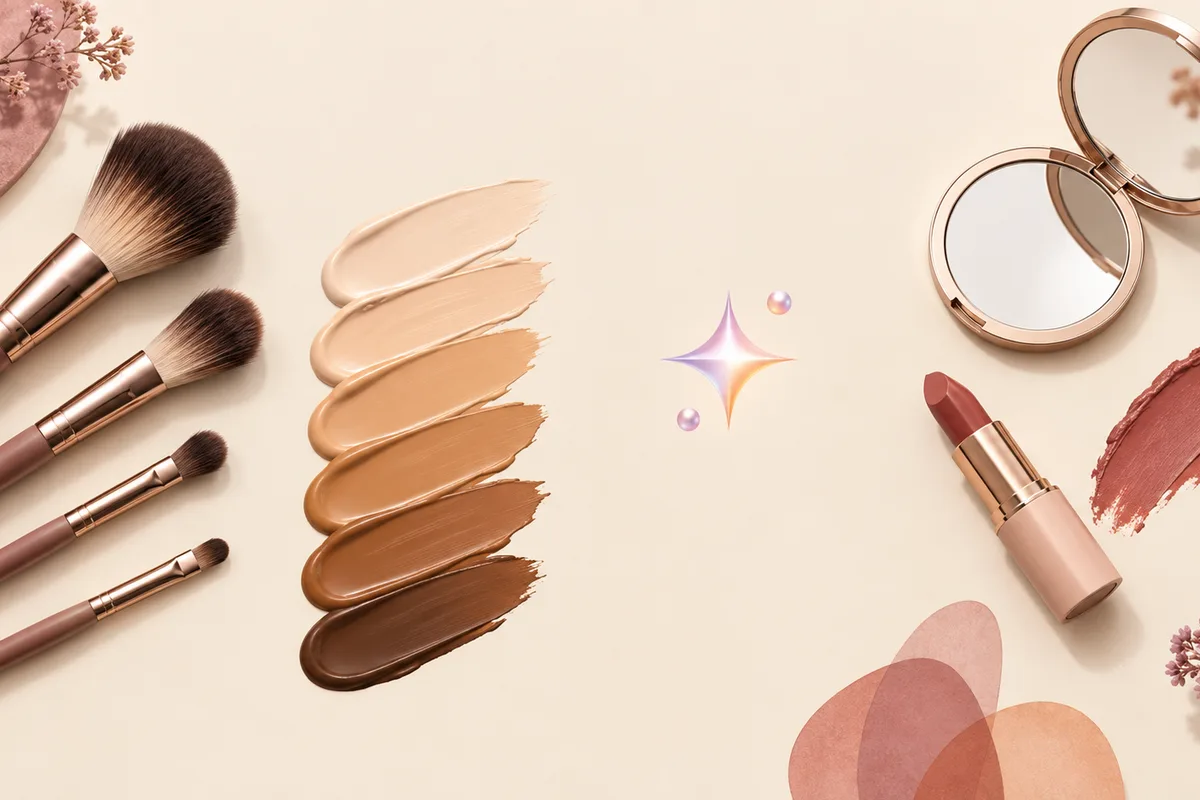
The short version: coverage is the useful first distinction
If you want a quick decision, start with how much of your natural skin you want to remain visible. Skin tints are generally positioned as sheer complexion products: they can soften uneven tone while letting freckles, texture, and much of the skin show through. Foundation is a broad category, with formulas ranging from sheer to full coverage and finishes from luminous to matte. The difference is not a strict technical boundary, however. A sheer foundation may wear like a tint, and a product marketed as a tint may be more opaque than expected.
That variation is why the label alone cannot make the choice. Ask what you want the product to do: give the face a little visual cohesion, cover a specific mark, create a more even base for other makeup, or hold up for a particular event. You may need no all-over complexion product at all. Concealer can cover selected areas while leaving everything else bare. This comparison describes general cosmetic roles, not a guarantee that a certain formula suits every skin type or solves a skin concern.
What a skin tint usually offers
A skin tint often has a fluid texture and light pigment payoff, making it easy to spread in a thin layer. It can be convenient when you want a low-effort base, a hint of color evening, or a look that feels less like full foundation. Many users apply it with fingers because the coverage is forgiving, but a sponge or brush can work too. The label does not guarantee hydration, longevity, or a particular finish; read the product description and test how it behaves on your skin.
A tint is a poor fit if you expect it to fully conceal prominent discoloration or remain untouched through a long, hot day without any touch-up. You can add concealer where desired, but using more tint in repeated layers may still not produce the level of coverage you want. A tint can also be less forgiving in shade selection if the range is limited or if the formula shifts color. Look at the shade on the face and neck in daylight, rather than choosing from a swatch photographed under studio lighting.
What foundation can do, and what it cannot promise
Foundation describes a broad set of base makeup rather than one fixed level of coverage. Sheer versions can simply unify tone, medium formulas can soften more visible variation, and fuller formulas can mask a larger portion of the skin's appearance. Finishes and textures also vary widely. A liquid can be light or dense, a cream can feel rich or thin, and a powder foundation can provide anything from a soft veil to stronger coverage. Read the claims and examine the formula rather than assuming all foundations are heavy.
More coverage does not automatically mean more polished, longer-lasting, or better for skin. A high-coverage product may look beautiful when applied sparingly and poorly when layered too thickly; a lighter product may be sufficient for your everyday needs. Foundation is not treatment for acne, redness, dryness, pigmentation, or any other medical concern. It can change how those features appear temporarily. If a complexion issue is uncomfortable, persistent, or changing, makeup comparison is not a substitute for medical guidance.
Compare them on the face, not by the package name
When possible, test a shade along the jawline and view it in natural light. Check whether the color blends into the face and neck without a visible boundary. Try the amount you would actually use, not an unusually thick swatch. Give the product a few minutes to settle, then see if it dries down, stays tacky, or changes color. Lighting, camera processing, and display settings can all distort online shade images. If a store tester is available, use clean applicators and avoid touching the product directly with fingers.
If samples are available, wear one for a normal day and check coverage, comfort, transfer, and appearance after several hours. Finishes can change as skin oils appear; neither a dewy nor matte result is universally better. The useful comparison is how the product performs in your routine, not an edited campaign.
Choose according to your schedule and application style
For rushed mornings, a tint may be appealing because a thin wash of color is often easy to blend with fingers. For a photographed event, a more even finish, or a precise coverage goal, foundation may offer a wider range of options. But a sheer foundation can also be quick and a tint can still require careful blending. Consider your time, the climate, the lighting, and whether you want to touch up. Long-wear language is a claim to evaluate, not a guarantee that you will never need to blot or reapply.
Tools change the finish. Fingers warm and spread many fluid formulas; a sponge can press product on and soften edges; a brush may build coverage efficiently but can leave streaks if used too quickly. Start with less than you think you need. Place the product in the center or only where you want coverage, then blend outward. If a tint looks too subtle, do not automatically apply several coats; a small amount of concealer in targeted areas may be more efficient. If foundation looks mask-like, sheer it out by applying less next time.
Skin type may guide finish, but it does not decide for you
People with dry-feeling skin may prefer flexible, natural, or luminous formulas, while some with oily skin may enjoy lightweight, oil-free, or more matte options. Those are useful preferences to test, not universal rules. The American Academy of Dermatology advises people with oily skin to consider oil-free, water-based makeup and notes that moisturizer still matters. For dry skin, its guidance emphasizes gentle skin care and moisturizer. Neither source defines which specific tint or foundation every person should buy; comfort and individual formula response still matter.
If you have sensitive skin, limit how many new products you test at once and check ingredient information if you know you react to something. A fragrance-free label may be a preference, but it does not mean a product cannot irritate. If you are acne-prone, noncomedogenic labeling may help narrow choices but does not guarantee an individual will never break out. Stop using a product that causes irritation. Avoid applying base makeup over broken or inflamed skin to conceal symptoms without appropriate professional guidance.
Do not confuse complexion makeup with sunscreen
A tint or foundation may have an SPF claim, but it is not safe to assume that the makeup amount used for color provides the labeled sun protection. The FDA classifies sunscreens as drugs and explains that makeup with sunscreen claims can be both a cosmetic and a drug. For dependable daily sun protection, apply a separate sunscreen according to its directions before complexion makeup, allow it to set, and reapply as directed when needed. Broad-spectrum SPF 30 or higher is a common AAD recommendation, alongside shade and protective clothing.
An SPF product can still be a convenient extra layer if used according to its labeling, but it should not be presented as a substitute for enough sunscreen. Do not blend a sunscreen into foundation or dilute one with moisturizer to change texture; mixing products can compromise the uniform application you need. If a sunscreen causes discomfort, consider another formulation and consult a qualified professional if reactions persist. Sun-protection advice is separate from whether a tint or foundation gives the finish and coverage you prefer.
Application and removal can be almost identical
For either category, use clean hands or clean tools, apply a thin layer, and check the result in more than one light source. Add concealer only where the base does not meet your goal. Powder is optional and can be restricted to areas where transfer or shine bothers you. Cream blush may be easier to blend before setting powder, while powder blush usually goes over a set base. Product formulas differ, so try combinations at home and follow package directions rather than treating any order as universal.
Remove either type at night with a cleanser or makeup remover that suits the formula, especially if the product is labeled long-wear or water-resistant. Clean tools regularly and avoid sharing makeup that touches eyes or lips. FDA consumer guidance recommends using cosmetics safely, following label directions, and stopping products that cause a reaction. Check packaging for expiry or period-after-opening instructions and discard a product whose smell or texture has changed. A slightly sheer routine is not worth keeping an irritating or contaminated item in use.
A quick decision guide
Try a skin tint if you want sheer coverage, a quick application, or a base that leaves more of your own skin visible. Try foundation if you want a larger choice of coverage levels or finishes and are willing to spend time finding a shade and formula that meet the goal. If you are undecided, test both sides of the face with thin layers or wear one product on separate days. Compare comfort and appearance after several hours, not just the fresh application. You can also mix a tint with spot concealing without ever buying a foundation.
SIMAKEUP AI offers multilingual beauty chat and an optional selfie for makeup questions, but does not promise a shade match, product suitability, or specific result. Lighting and camera processing affect selfies. Test products and read labels; consult a health professional about medical concerns. Choose tint for sheer coverage and foundation for your desired coverage or finish.
Frequently asked questions
Is skin tint just a lighter foundation?
Often it is intended to be sheer, but labels are not standardized. Some tints provide noticeable coverage and some foundations are very light, so compare the actual formula.
Which one is better for everyday wear?
Either can work. Choose according to the coverage, finish, comfort, and application time you want; concealer-only is also an option.
Can skin tint replace sunscreen?
Do not rely on makeup alone for sun protection. Use sunscreen according to its label before makeup and follow reapplication directions.
Which is better for oily or dry skin?
Neither category is automatically best. Test formula and finish; oily skin may prefer oil-free options, while dry-feeling skin may prefer a comfortable flexible finish.
Sources and further reading
The sources below support safety, skincare or technology context. Application advice is general educational guidance, not a claim of hands-on product testing or expert medical review.